Project Information
Project Type: Special Project
Advisor: James Chien-Mo Li
Description
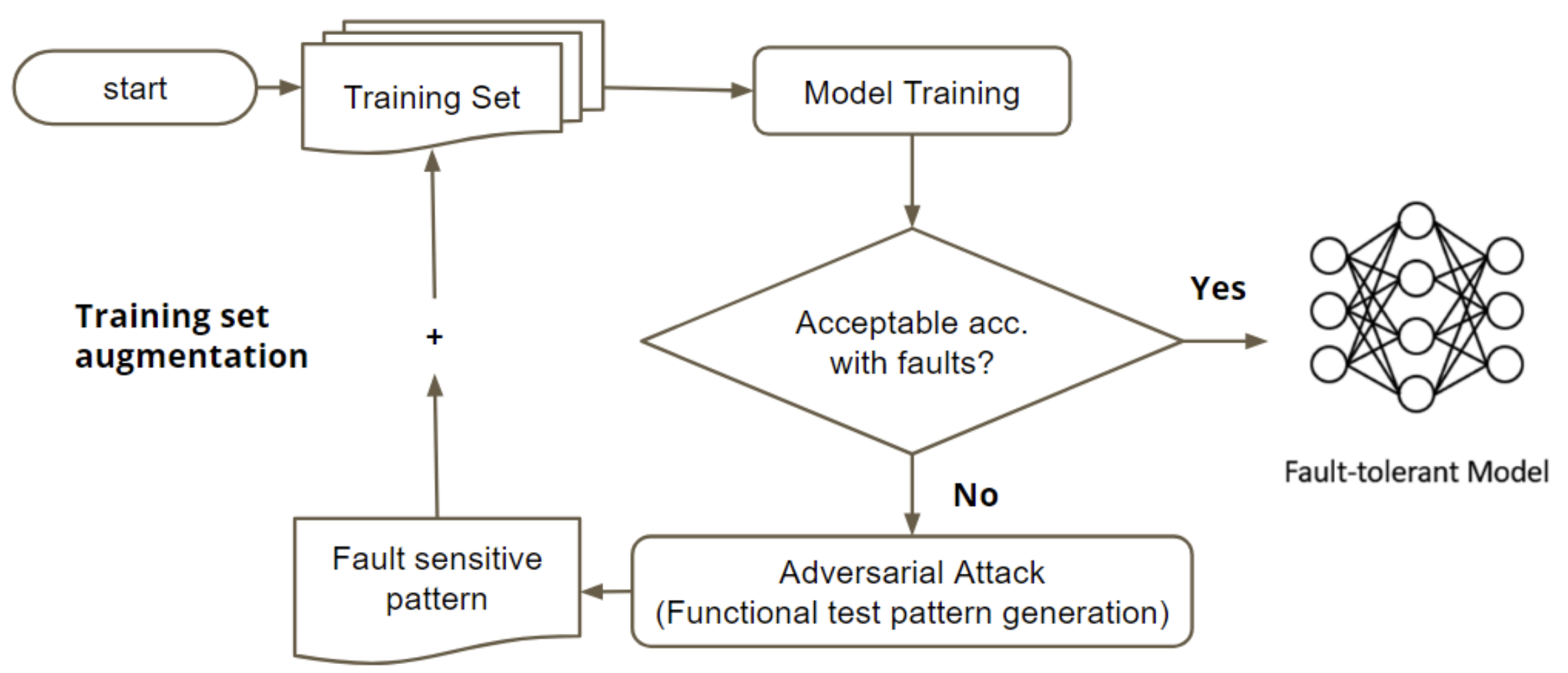
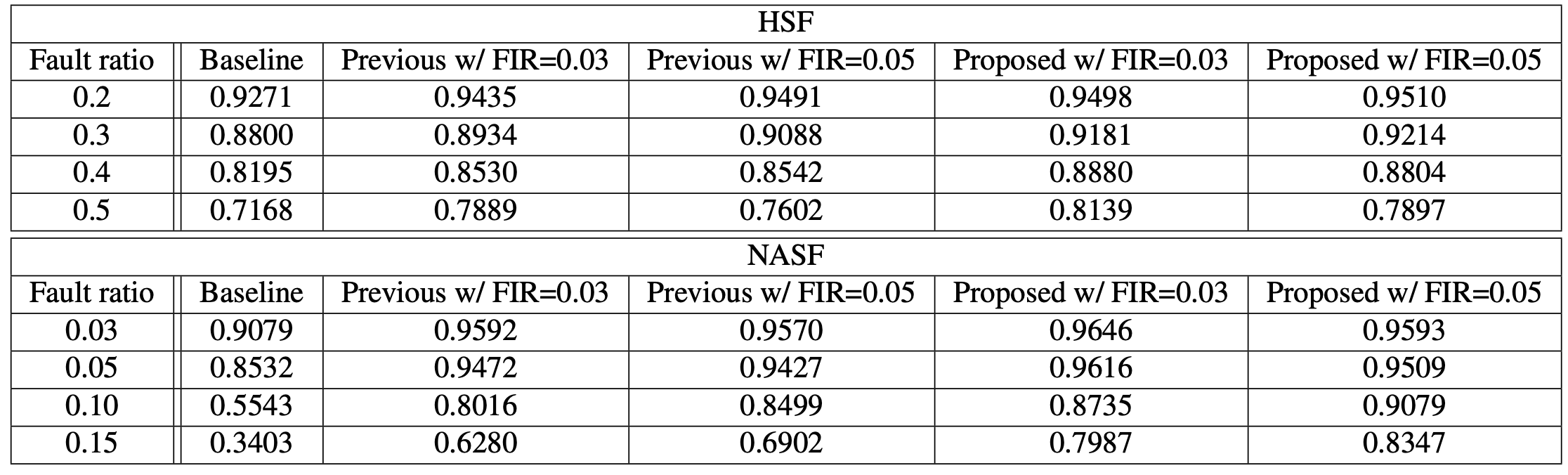
With the growing adoption of neuromorphic circuits in edge computing, ensuring their reliability under hardware faults has become increasingly important. While previous fault-tolerant training methods have improved robustness, they often suffer from slow convergence and limited accuracy under certain fault models. This work proposes an enhanced fault-tolerant training technique that integrates adversarial attack–based pattern generation to accelerate convergence and improve model resilience. By iteratively generating new training patterns that amplify discrepancies between fault-free and faulty models, the proposed method effectively increases dataset diversity and training efficiency. Experimental results on spiking neural networks (SNNs) under two neuron fault models—HSF(Hard to Spike Fault) and NASF(Neuron Always Spike Fault)—demonstrate that our approach achieves higher accuracy in faulty scenarios while maintaining comparable performance in fault-free conditions. Furthermore, the proposed method significantly reduces training time when pre-generated patterns are used, confirming the effectiveness of adversarial pattern generation for fault-tolerant model training.
Method
Figure 1: Flow of Pattern Generation
Results
Accuracy
Figure 2: Average Accuracy of Each Model under Faulty Scenario
Runtime
Figure 3: CPU time for HSF, FIR = 0.05

Figure 4: CPU time for NASF, FIR = 0.03
